Inspection guide
When to Request a Foundation Evaluation in Ankeny
You do not need to know the cause before asking for help. Start with what changed, where it happened, and whether it is getting worse.
Request Foundation Help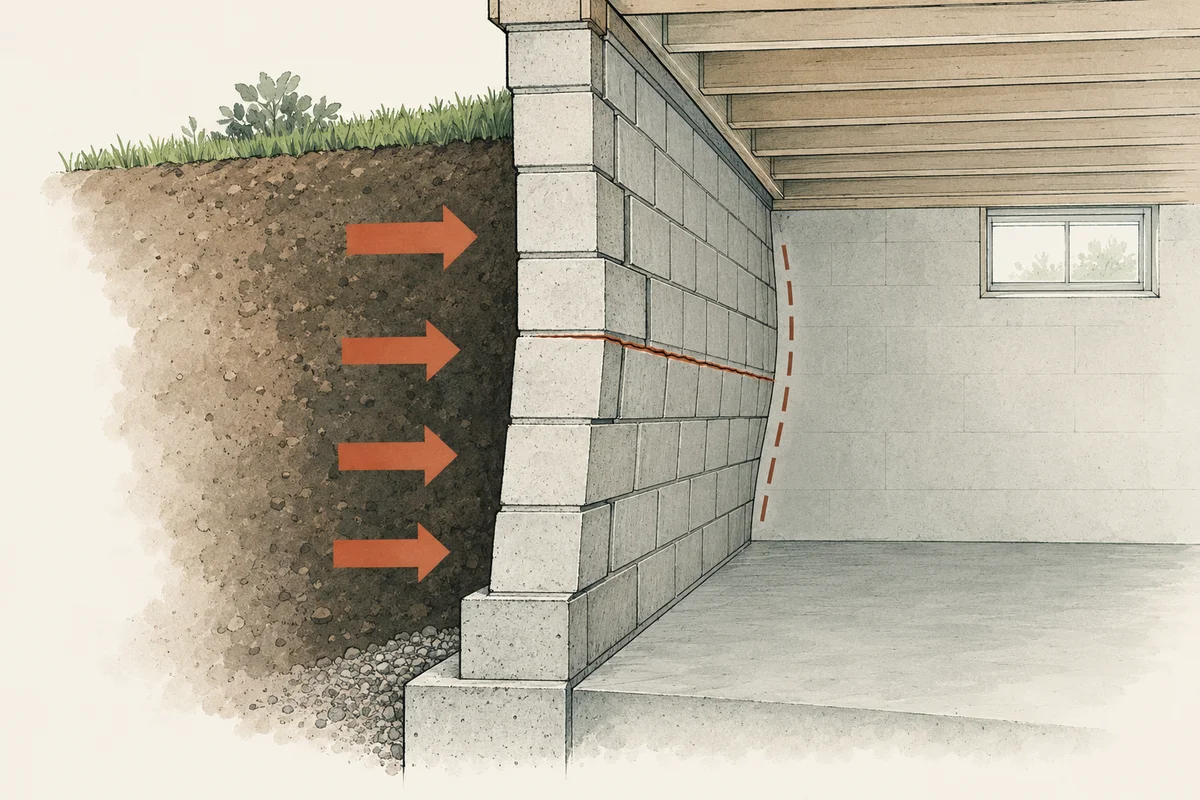
Which changes deserve a closer look?
- A crack that grows, has uneven edges, or lets in water.
- A basement wall that leans or bends inward.
- New floor slopes, sticking doors, or gaps around windows.
- Several changes in the same part of the house.
These signs guide an inspection; they do not prove a cause. Read more about cracks, bowing walls, and settlement.
Uncertainty makes repair choices harder.
Without a clear assessment, you may not know whether to monitor the issue or plan repairs. An inspection should explain what was found, what remains unclear, and what to do next.
If a wall seems to be moving quickly or you think the area is unsafe, seek prompt local professional help.
Bring photos, dates, and questions.
Take wide photos and close views. Note when the problem first appeared, any water entry, and past repairs. Keep records of changes to gutters or drainage.
Ask: What supports this finding? Is monitoring an option? What will the repair address? What signs should prompt another visit?
A contractor and an engineer have different roles.
A repair contractor can assess the problem and propose work. An independent structural engineer can give a separate assessment or design, which may help when the issue is complex or repair plans differ.
A practical next step
Not sure what to call the problem?
Choose “Other” on the form if no category fits.