Settlement repair
Foundation Settlement Repair in Ankeny
Settlement means part of a foundation has moved downward. Uneven floors, sticking doors, and new gaps can be clues, but each can also have other causes.
Request Foundation Help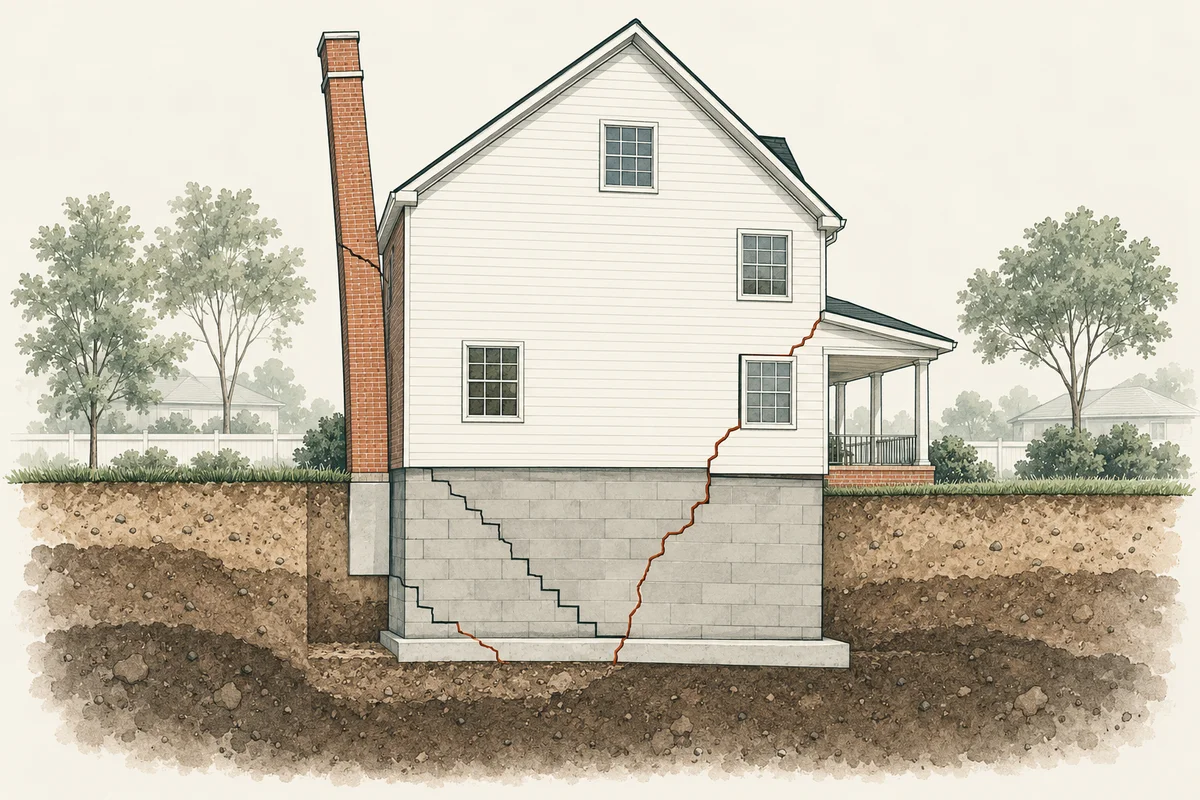
Are several changes in the same area?
Look for a floor that slopes, doors that have become hard to close, gaps around trim, or diagonal cracks near windows. Note which part of the house is affected.
One sticking door does not prove a foundation problem. Several new changes in the same area give an inspector more to investigate. Use our inspection checklist to record what you see.
Find out whether movement is continuing.
New or growing changes deserve attention. Repairing trim or patching cracks may not help for long if the support below the home is still shifting.
An inspection may include floor measurements, crack patterns, drainage, and past repairs. Wet or dry soil, loose fill, and other site conditions can affect support. The cause needs to be checked at your property.
The goal is a clear support plan.
Some findings may call for drainage changes or limited repairs. Others may call for piers, which carry weight to support deeper in the ground. Read how stabilization and underpinning work before comparing methods.
Ask whether the plan aims to limit further movement, lift a settled area, or both. Lifting is not always possible. The expected result and its limits should be in writing.
Compare evidence as well as price.
If the cause is unclear or repair plans differ, an independent structural engineer may help you assess the options. Use the cost guide to compare what each bid includes. Our local conditions guide explains why soil and drainage also matter.
A practical next step
Seeing changes in your home?
Describe the rooms or areas affected and when you first noticed the change.